Blog
Building Beyond the Basics: Arduino Projects in Action
When this Arduino class first began, students started with the fundamentals: learning how to use a breadboard, connect wires, and write simple code. Their first project was straightforward but important—successfully wiring and programming a fan so it would turn on. This introductory challenge gave everyone a solid understanding of how hardware and software work together.
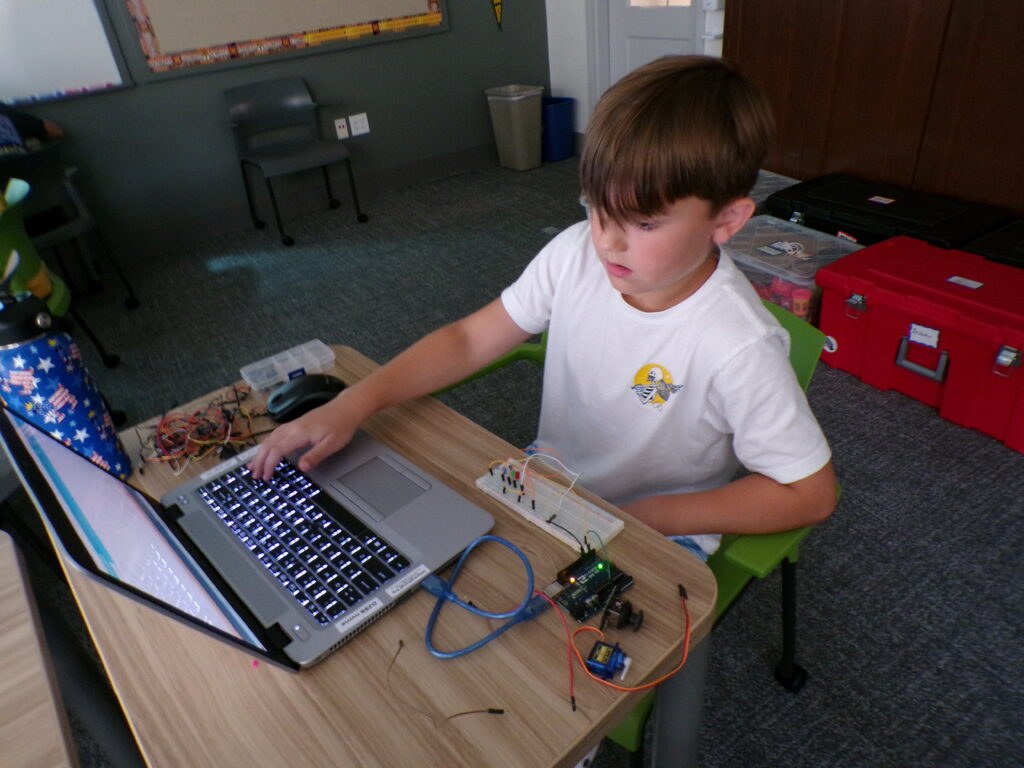
Once they had mastered the basics, the class was eager to take on more ambitious challenges. Rather than following the same project, many students branched out into their own creative ideas, combining coding skills with hands-on circuit building.
One student is programming an RGB LED to cycle through different colors in a sequence, learning how to control lighting effects through code. Another group recreated the familiar offline Chrome T-Rex game, using a numeric keypad and a compact Arduino board as the controller. Students also explored RFID technology by wiring a system that uses a key fob to lock and unlock a door. Their project can detect whether the correct or incorrect key fob is placed near the sensor, demonstrating how access control systems work.
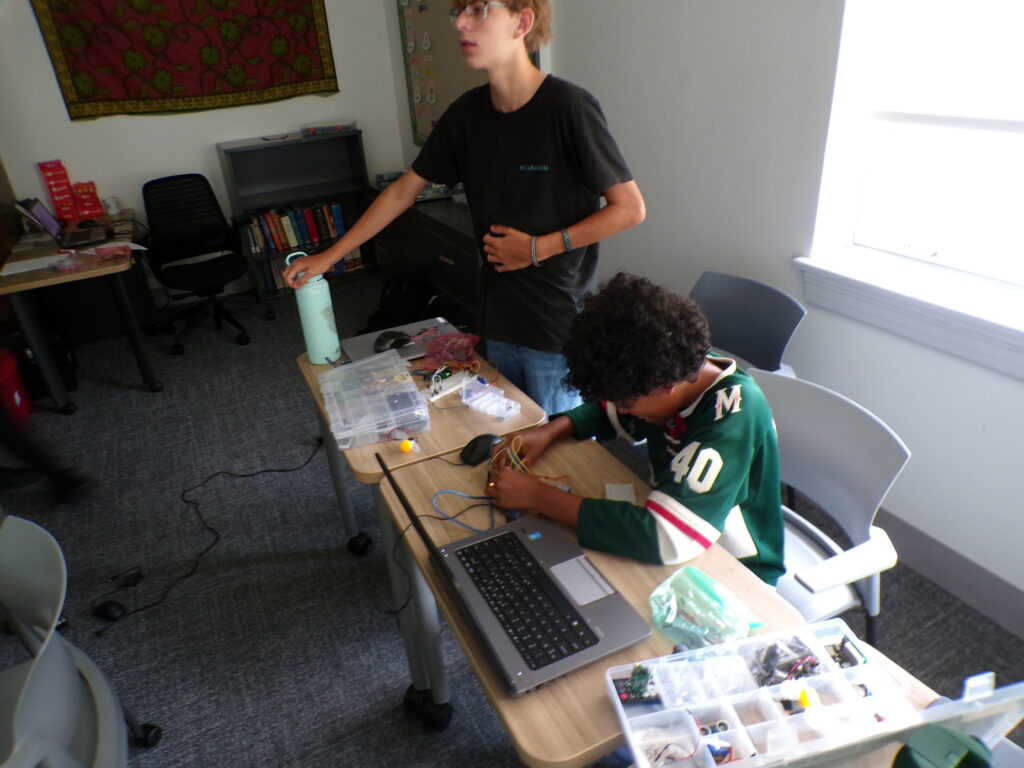
Creativity has also been on display through a project designed to simulate a fireworks show. By combining colorful LED light patterns with sound effects, students are creating a display that captures the excitement of fireworks using both electronics and programming.
The class continues to push itself with new goals. Their latest ambition is to build a fully functioning calculator using an Arduino, requiring them to integrate inputs, outputs, and more advanced programming logic.
Every project has challenged students to apply both coding skills and their understanding of Arduino boards, wiring, sensors, and electronic components. More importantly, these experiences have encouraged problem-solving, experimentation, and creativity. What started as a simple lesson in wiring a fan has grown into a collection of innovative projects that demonstrate how quickly students can turn foundational knowledge into exciting, real-world applications.